How to protect your Fraser Valley property from storm damage
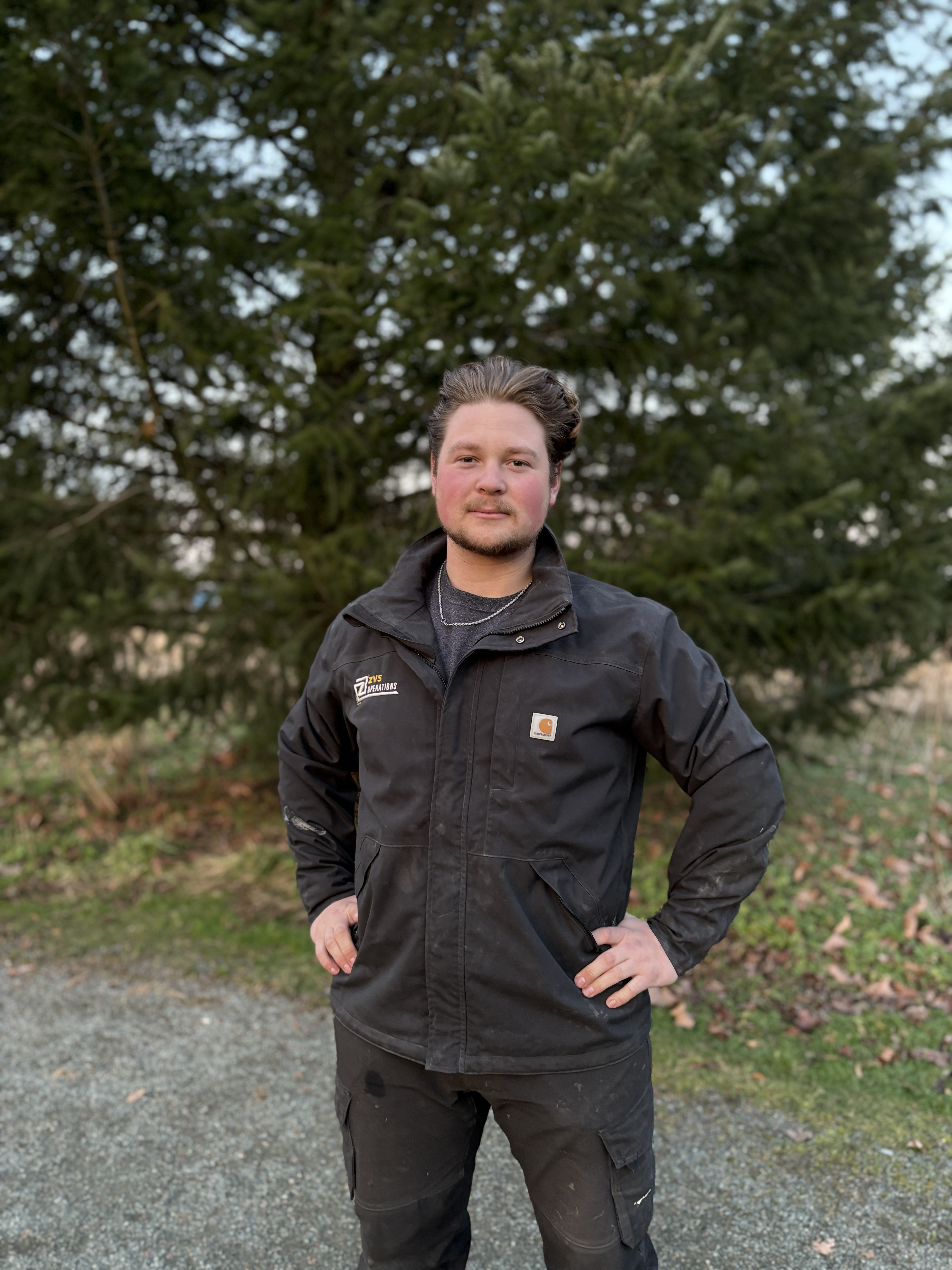
The best way to protect a Fraser Valley property from storm damage is to deal with three things before the next storm hits: trees that could fall, water that has nowhere to go, and ground that's sloped the wrong way. Soaked soil and strong wind are when weak trees fail and poor drainage turns into flooded yards, driveways and crawl spaces.
Key takeaways
Wind gusts reached 72 km/h in Abbotsford during the November 8 windstorm, with the ground already saturated.
Most storm damage on acreages and residential lots starts with one of three problems: a weak tree, poor drainage or bad grading.
Homeowners can clear gutters and walk the yard. Removing hazard trees, digging ditches and regrading need equipment and experience.
Fixing these problems before a storm costs far less than cleaning up after one.
If you own a home or acreage in Langley, Abbotsford, Chilliwack, Mission or Maple Ridge, this fall's atmospheric rivers have probably shown you where your property is weak. Maybe a big limb came down near the house, water pooled against the foundation, or your gravel driveway washed out.
This guide walks through why storms hit Fraser Valley properties so hard, the warning signs to look for, what you can safely do yourself, and when it's time to bring in a contractor with heavy equipment.
Worried about a tree or a wet yard before the next storm? Call ZVS Operations at (604) 353-3386 or send us a message to book a site visit.
Why do storms do so much damage to Fraser Valley properties?
Storms do the most damage here because heavy rain soaks the ground first, then wind arrives while the soil is too soft to hold tree roots or carry water away. An atmospheric river is a long band of moisture off the Pacific that can drop days of heavy rain in a row. This fall, back-to-back systems rolled in with only a day or two between them.
A few things make our properties more exposed than most:
Soft, saturated soil. Wet ground loses its grip on roots. A tree that stood through summer winds can tip over in a 60 to 70 km/h gust once the soil is soaked.
Shallow-rooted and brittle trees. Western redcedar and hemlock tend to root shallow in wet ground. Alder and cottonwood grow fast and drop limbs easily.
Crowded second-growth. Many acreages are packed with trees that grew back tightly after old logging. Thin, tall trees lean on each other and fail as a group.
Newly exposed edges. When a neighbouring lot is cleared, trees on the edge suddenly take wind they never had to before. This is called windthrow, and it's common in the first few winters after clearing.
Slow-draining ground. Much of the valley sits on clay and silt with a high water table. Water that can't soak in has to be moved, or it pools.
We've covered the tree side of this in Is your property safe? Why managing danger trees and overgrowth matters, and the water side in Why poor drainage is quietly destroying Fraser Valley properties. This guide pulls both together for storm season.
What are the warning signs your property isn't storm-ready?
The warning signs show up in three places: your trees, where water collects, and how the ground is sloped. Walk your property after the next heavy rain and check for these.
Where to look | Warning sign | What it usually means | Who should fix it |
Trees | Dead top, bare branches or peeling bark | The tree is dying and will drop pieces in wind | A contractor with the right equipment |
Trees | A new lean, or soil heaving or cracking at the base | Roots are letting go | A contractor, as soon as possible |
Trees | Cracked or hanging limbs over the house, shop, driveway or power line | A "widowmaker" waiting for the next gust | A contractor (BC Hydro if it's touching a line) |
Trees | Mushrooms or soft, hollow wood at the base | Root or trunk rot | A contractor or certified arborist |
Water | Water pooling against the foundation or under the deck | Downspouts or grading send water toward the house | Homeowner first, then a contractor |
Water | A ditch or culvert that overflows every storm | It's plugged, too small or not sloped right | A contractor |
Water | Wet crawl space or basement after rain | Water has nowhere to go but in | A contractor |
Ground | Low spots that stay soggy for days | Poor grading or no drainage path | A contractor |
Ground | Gravel driveway washing out or rutting | No crown, no ditch, or a weak base | A contractor |
Ground | New cracks, slumping or erosion on a slope | The bank is moving | A geotechnical engineer, then a contractor |
One sign on its own isn't always an emergency. Two or more in the same spot, like a leaning tree in a soggy low area, is a problem that will get worse with every storm.
What can you do yourself before the next storm?
You can handle the small, ground-level jobs yourself in an afternoon. Anything involving a chainsaw above your head, a tree near a building, or moving soil is where a contractor earns their money.
Do it yourself:
Clear gutters and downspouts. Leaves and needles plug them fast in fall. A plugged gutter dumps water right at your foundation.
Point downspouts away from the house. Add extensions so water lands at least 1.5 to 2 metres from the foundation, on ground that slopes away.
Clear ditch and culvert openings. Pull leaves, branches and garbage off grates and culvert ends. Never wade into a fast-moving ditch.
Tie down or store loose items. Patio furniture, trampolines and tarps become projectiles in a 70 km/h gust.
Walk the property and take photos. Note leaning trees, wet spots and washouts. Photos help a contractor give you a better plan and price.
Hire a contractor for:
Hazard and storm-damaged tree removal, especially near the house, shop, driveway or power lines.
Drainage work like new ditches, culverts, French drains and drain lines that move water off the property.
Regrading so the ground slopes away from buildings and low spots stop holding water.
Driveway and access repairs, including washed-out gravel, missing crown and failed culverts under the driveway.
Storm cleanup of fallen trees, root balls, brush piles and debris.
ZVS Operations does all five across the Fraser Valley. You can see the full list on our services page.
When should a hazard tree come down, and do you need a permit?
A hazard tree should come down as soon as it shows signs of failing and could hit something that matters, like your house, shop, vehicles, driveway, a fence line or a power line. Waiting for spring means betting it makes it through every storm between now and then.
Removing a big tree near a building isn't a homeowner chainsaw job. A tree under tension from wind or a lean can split, kick back or fall the wrong way. We use excavators and the right rigging to take trees down in a controlled direction, then handle the stump, root ball and cleanup in the same visit.
Check your town's tree rules first. Most Fraser Valley municipalities regulate tree cutting on private land, and several have a process for hazardous or storm-damaged trees.
Town | What the rules say (as of November 2026) |
Abbotsford | The City's Tree Management Bylaw No. 3600 took effect March 1, 2026. Outside the ALR (Agricultural Land Reserve), trees over 20 cm across at chest height generally need a permit. A tree rated high or extreme risk by a qualified tree risk assessor can be exempt once a City arborist verifies it. Keep photos of the damage. |
Maple Ridge | Trees 20 cm across or larger at chest height need a permit. The City may waive it for a tree severely damaged in a storm, if the person who removes it reports it to the City right away. |
Langley Township | The Township has a township-wide tree protection bylaw. Check its permit and hazard-tree rules before cutting. |
City of Langley | The City has its own tree bylaw, separate from the Township's. Check before cutting. |
Chilliwack and Mission | Rules depend on your zoning, whether you're developing the lot, and environmental areas. Check with the City before major cutting. |
The safest move is to have the tree looked at before it fails. When you book a site visit, we'll walk the property with you, flag which trees are a real risk, and help you sort out what your municipality needs before work starts.
If a tree is already on a power line, stay at least 10 metres back and call 911. That's BC Hydro's own advice. Don't touch the tree, the line, or anything the line is touching. Once the utility has made it safe, we can clear the rest.
How do you stop water from damaging your house and yard?
You stop water damage by giving the water a planned path off your property, away from buildings, before it has time to pool. In the Fraser Valley that usually means a mix of drainage and grading, because our clay and silt soils won't soak up a week of heavy rain.
1. Regrade around buildings. The ground should slope away from your foundation on every side. Over time, settling, gardens and fill piles flatten it out or even tip it back toward the house. Regrading fixes the slope so rain runs away instead of in.
2. Add or rebuild ditches. A properly sized and sloped ditch along a driveway or property line can carry a huge amount of water. Many older acreages have ditches that have filled in or were never graded to drain anywhere.
3. Install or replace culverts. A culvert is the pipe that carries a ditch under a driveway or crossing. If it's too small, crushed or plugged, water backs up and goes over the top, taking your gravel with it.
4. Put in French drains and drain lines. A French drain is a trench filled with drain rock and perforated pipe. It collects water from a soggy area or along a foundation and carries it to a ditch or safe outlet.
5. Build up and crown driveways. A gravel driveway needs a solid base and a slight crown (higher in the middle) so water sheds to the sides. Without it, every storm cuts ruts and washes material away.
These jobs are all excavation and site prep work, which is the core of what we do. If you want the deeper version, read Protect your property from Fraser Valley flooding with proper drainage and Understanding residential excavation in the Fraser Valley.
What should you do after a storm damages your property?
After a storm, put safety first, then document the damage, then get the cleanup and repairs booked before the next system arrives.
Check for hazards before you walk the property. Look for downed lines, hanging limbs and trees leaning on other trees. Stay 10 metres back from any power line and call 911 if one is down.
Take photos and video of everything. Get the damage, the fallen trees and any water inside buildings. Your insurer and your municipality may both want them.
Call your insurance company early. Ask what they cover for fallen trees and water damage, and what they need from you.
Don't cut trees that are under tension. A tree pinned under another tree or bent over a building can spring back with enough force to kill. Leave those for a crew with equipment.
Book cleanup and repairs. Fallen trees, root balls, brush piles and washed-out driveways all get worse if they sit through another storm.
We handle storm cleanup from start to finish: cutting and removing fallen trees, pulling or grinding stumps, hauling debris, and repairing the drainage or grading problem that caused the damage in the first place. That last part is what keeps you from making the same call next winter.
A recent storm-prep job in Maple Ridge
The property: A Maple Ridge quarter acre property. a pewrfectly manicured green lawn covering the entire backyard, With no visible issues.
The problem: The problem was that when the rain came it casued puddles and mud all throughout the yard and water leaked into the basement.
What we did: We came in and regraded the yard to slp away from the house. installed all new perimeter drainage around the house replacing the old collapessed clay drain tile. Installed a tank to collect the excess rain water and used a sump pump to run the water out to the back of yard where it can drain into the ground.
The result: New drainage that you can trust, no more muddy wet backyard lawn and a dry usable basement. no they can sleep soundly even through the crazy storms we're having.

How ZVS Operations protects Fraser Valley properties before the storm
ZVS Operations handles the heavy work that keeps storms from turning into damage: hazard tree removal, land clearing, drainage, ditching, culverts, regrading and storm cleanup. You get one point of contact from the first site visit to the last load of debris.
We start by walking the property with you. We'll point out the trees that are a real risk, show you where water is going and where it should go, and help you sort out any permits your municipality needs. Then you get a clear plan and price, in writing, before any work starts.
We work across Langley, Abbotsford, Chilliwack, Mission, Maple Ridge and the rest of the Fraser Valley. See everything we do on our services page, or learn more about us on the ZVS Operations homepage.
Frequently asked questions
How do I know if a tree on my property is dangerous? A tree is likely dangerous if it has a dead top, a new lean, cracked or hanging limbs, rot or mushrooms at the base, or soil lifting around the roots. The risk is highest when it could hit a building, driveway or power line. If you're unsure, have it looked at before the next storm.
Can you remove trees and do drainage work in fall and winter? Yes. We work through fall and winter across the Fraser Valley. Wet season is actually the best time to plan drainage, because you can see exactly where water collects and how it moves across the property.
Why does my yard flood every time it rains? Most Fraser Valley yards flood because the water has no planned path off the property. Clay and silt soils drain slowly, ditches fill in over the years, and grading settles toward the house. Regrading, ditching and drain lines give the water somewhere to go.
Does home insurance cover trees that fall in a storm? It depends on your policy. Damage a fallen tree causes to your house or other covered buildings is often covered, while removing a tree that fell without hitting anything may not be. Call your insurer, and take photos of everything before cleanup starts.
How much does storm damage prevention cost? The price depends on the size and number of trees, how close they are to buildings or lines, access for equipment, how far water has to be moved, and how much material has to be hauled away. We'll walk the property and give you a clear price before any work starts.
Ready to get your property storm-ready?
The next storm will find the weak tree, the plugged ditch and the low spot by the foundation. Dealing with them now costs far less than cleaning up after. Call ZVS Operations at (604) 353-3386 or send us a message to book a site visit. We work across Langley, Abbotsford, Chilliwack, Mission, Maple Ridge and the rest of the Fraser Valley.
Related reading
This guide is general information, not a quote or legal advice. Tree bylaws and permit rules vary by municipality and change over time, so confirm with your local government before removing trees. Last verified: November 9, 2026.


Comments